


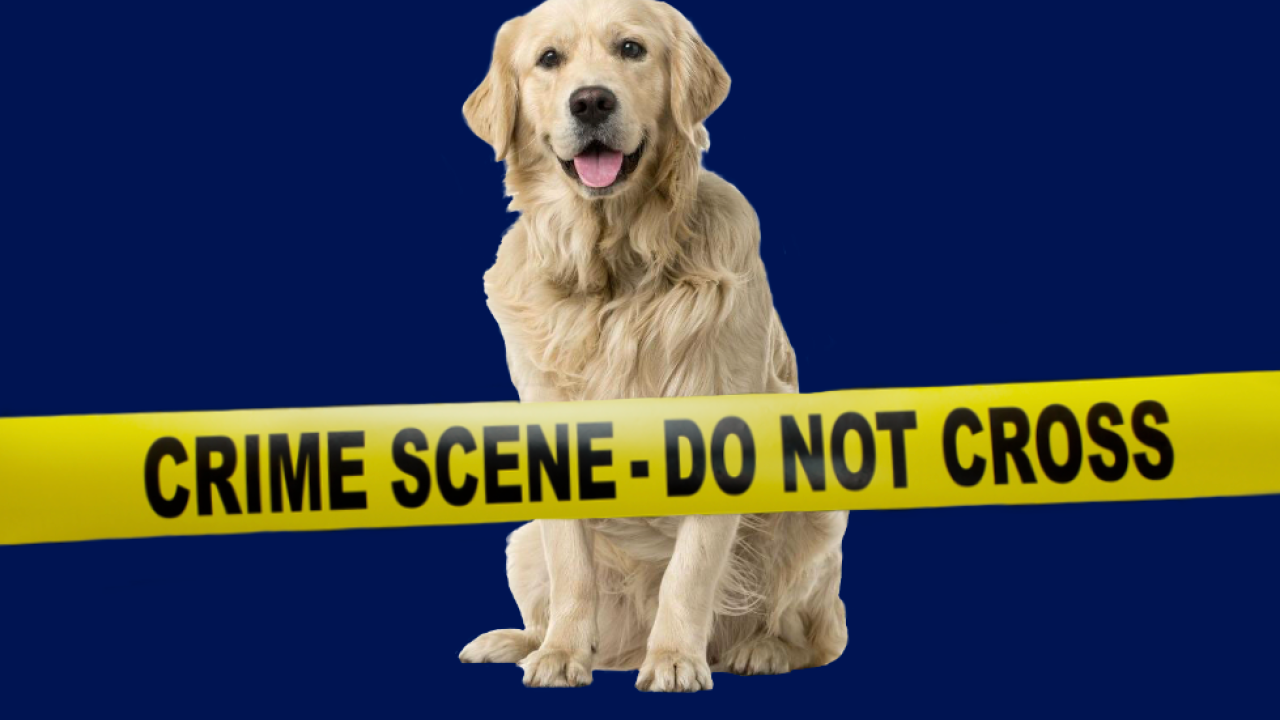
Veterinary Forensic Genetics
How Animal DNA Helps Scientists Solve Crimes
What is Veterinary Forensic Genetics?
Did you know dog poop can help solve a murder? From catching animal abusers to discovering missing pets, veterinary forensics plays a vital role in criminal investigations.
Veterinary forensic genetics refers to the analysis of animal DNA evidence collected as part of a criminal investigation. Domestic animals can be victims, perpetrators, or witnesses to crimes. Animal DNA found at an investigation site can provide valuable insight into what may have happened at a crime scene. For example, dog poop that was stepped on by a perpetrator can place a suspect at the scene of a crime. Through veterinary forensics, scientists can use animal DNA to link a specific person or animal to a criminal act.
The Veterinary Genetics Laboratory (VGL), a sub-branch of the UC Davis School of Veterinary Medicine, expanded in the 1990s to include a special unit dedicated to forensics. VGL-Forensics was the first accredited crime lab in the US dedicated to analyzing the DNA of domestic animals. Since it began, they have assisted over 1500 forensic cases, of both domestic animals and wildlife. Their services are available to anyone in need, not just law enforcement.
Veterinary forensics is very similar to human forensics, only it is done with animal DNA. Both animal and human forensics require the same accreditations and involve the same process. The VGL-Forensics unit tests for many different species. Some specimens, such as blood, fur or other biological material, may come from an unidentified species, but can still be tested. About a third of all cases, however, involve dog samples. Other common cases include cattle theft, poaching, horse doping, and many more.
Animals as Victims

VGL Forensics helped secure the owners’ conviction. The rescued dogs were cared for by the
Humane World for Animals. Photo Credit: Travis Page.
In cases of cruelty and abuse, such as dogfighting and neglect, animals are the victims. Their DNA samples obtained from hair, saliva, blood, or feces can be key to connecting a suspect to a case of animal cruelty or abuse. By revealing the perpetrators, they can be held accountable for their actions and prosecuted to the full extent of the law.
The American Society for the Prevention of Cruelty to Animals (ASPCA) estimates that tens of thousands of people are involved in dogfighting in the US. While this is a felony in the United States, it still occurs across the nation. VGL-Forensics partnered with the ASPCA to tackle this issue. They created the Canine Combined DNA Index System database (or K9 CODIS for short), similar to the FBI’s CODIS for humans. The database includes DNA profiles of dogs seized as part of a dogfighting investigation, helping to link the responsible people to the criminal offense. K9 CODIS aims to put a stop to dogfighting by holding these criminals accountable.
Veterinary forensics can also play a role in solving cases involving missing or stolen animals. By comparing known and unknown DNA samples to determine if they are from the same animal, scientists can help uncover clues about a pet’s disappearance. This aids in reuniting animals with their owners or providing much-needed closure. DNA analysis can also help identify specific animals and potentially link them to suspects, aiding in the search for thieves.
Animals as Perpetrators

In other cases, however, animals can be the perpetrators, such as in dog attacks or property damage. By analyzing DNA found at the scene or on a victim, scientists can link a specific animal with a crime.
For example, in 2003, two dogs tragically killed a woman and attacked another in Columbus, Ohio. While the victims could not identify the dogs, VGL-Forensics tested the saliva on their clothing. They were able to retrieve cells from the saliva and use that DNA to trace the attacks to two specific dogs from the same household. The suspect only admitted his dogs had escaped and had a history of attacking people after the DNA test results were revealed. The owner was convicted of involuntary manslaughter and assault in 2004.
Animals as Witnesses
In other cases, animals are merely the witnesses to a crime. For example, in cases of homicide or assault, the DNA from a victim or suspect’s pet can connect them to the crime. This is how VGL-Forensics helped convict the murderer and accomplices in a triple homicide case.
There were two key pieces of evidence in the Indiana triple murder case of 2000. Feces at the scene showed a footprint and was tested and compared to the scrapings of feces from the suspect’s shoes. VGL-Forensics was able to match the DNA from both fecal samples, proving that the suspect had been at the crime scene. He was found guilty and sentenced to life in prison.
Summary
When a crime occurs, many people may not realize the critical role companion animal DNA can play in discovering the truth. By providing testing services to law enforcement agencies and the public, VGL-Forensics can help solve a criminal case and support bringing justice to all involved.
References
Somnay, V., Duong, T., Tsao, R. Y., & Prahlow, J. A. (2020). Crime Scene Analysis Through DNA Testing of Canine Feces-A Case Report. Academic forensic pathology, 10(1), 56–61. https://doi.org/10.1177/1925362120944743
Fohner, K. (2025, September 15). “Dogfighting is a brutal and senseless crime:” Gaston man going to prison for animal cruelty. Gaston Gazette; The Gaston Gazette. https://www.gastongazette.com/story/news/local/2025/08/15/gastonia-man-…
Forensics. (n.d.). UC Davis Veterinary Genetics Laboratory. Retrieved December 3, 2025, from https://vgl.ucdavis.edu/forensics